
How Long After Aeration and Overseeding Can I Mow?
The short answer to how long after aeration and overseeding can I mow is two to three weeks. Let grass height make the final call: mow for the first time when most of the new seedlings stand 3 to 4 inches tall. If your lawn was aerated but not seeded, you can mow as soon as the surface is dry.
The first-mow window is the stretch between seeding day and the first cut, when seedlings have too little root to survive a mower's wheels and blade. At Sparta Lawn Care, we aerate and overseed lawns across Columbia and the Midlands, and an early first mow is one of the easiest ways to undo a good seeding.
This article explains why the wait matters, how to tell when your new grass is ready, how to mow seedlings without damaging them, and how mowing and watering fit around aeration day itself.
Why you should wait before the first mow
Wait two to three weeks, because new seedlings have almost no roots and a mower can pull them out of the loose soil that aeration leaves behind. Mowing is gentle on mature turf. It is rough on grass that is two inches tall and anchored by a few hair-thin roots.
What an early mow does to new seedlings
Aeration pulls cores and opens the soil, and overseeding drops seed into those holes and onto the surface. For the first couple of weeks that soil stays soft and loose , which is the point of aerating. Mower wheels press ruts into it, and a spinning blade tugs on seedlings hard enough to uproot them. A heavy riding mower also re-compacts the ground you just loosened.
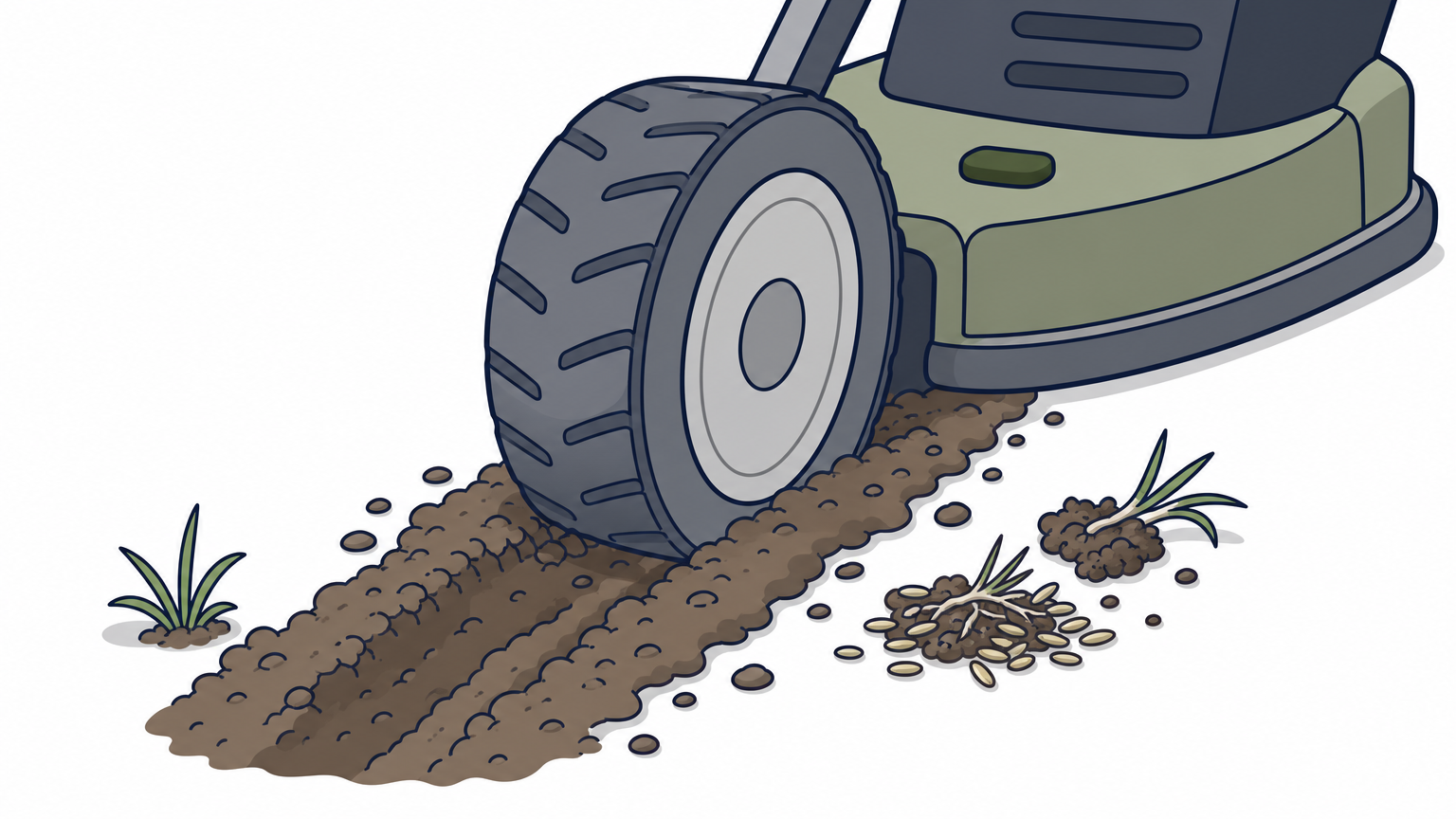
Timing matters even before the seed sprouts. A mower run over seed that has not germinated pushes seed into clumps and leaves bare stripes where the wheels passed. Wet soil makes every one of these problems worse.
Why height beats the calendar
Guides quote anything from 10 days to four weeks because germination speed depends on the seed and the weather. Perennial ryegrass can sprout in about a week, tall fescue often takes two weeks or more, and the cool soil of late fall slows both. Use grass height as your trigger , not the date on the calendar.
Some turf programs start mowing earlier, once roughly one in ten seedlings reaches 2 inches, to keep mature grass from shading the new blades. That works with a sharp mower, firm soil and a light touch. For most homeowners, waiting for 3 to 4 inches is the safer call. It also answers whether you can mow two weeks after overseeding: yes, if the seedlings have reached that height. If they have not, wait a few more days.
Mow when the seedlings are 3 to 4 inches tall, not when a date on the calendar says so.
How to tell when your new grass is ready to mow
Your grass is ready when most of the new blades stand 3 to 4 inches tall, the soil feels firm underfoot, and the leaves are dry. Check all three before you start the mower.
A typical timeline from seeding day to first mow
The table shows what a fall overseeding usually looks like. Your dates will shift with seed type and temperature, so treat them as a range and not a deadline.
| Stage | Typical timing | What you do |
|---|---|---|
| Seeding and watering in | Day 0 | Water lightly, keep off the lawn |
| Germination | Days 5 to 21, depending on seed and soil temperature | Keep the top inch damp, do not mow |
| Seedlings 1 to 2 inches | Often weeks 1 to 2 | Measure and keep waiting |
| Seedlings 3 to 4 inches | Usually weeks 2 to 3, longer in cool weather | Make the first mow |
| Second mow | 5 to 7 days after the first | Return to your normal schedule |
Here is a worked example. You seed on October 12. By October 22, day 10, you see a green haze about an inch tall. On October 29, day 17, a ruler reads 3.5 inches across most of the lawn. That is your first-mow day.
Four checks before you mow
Run through this list on the morning you plan to cut:
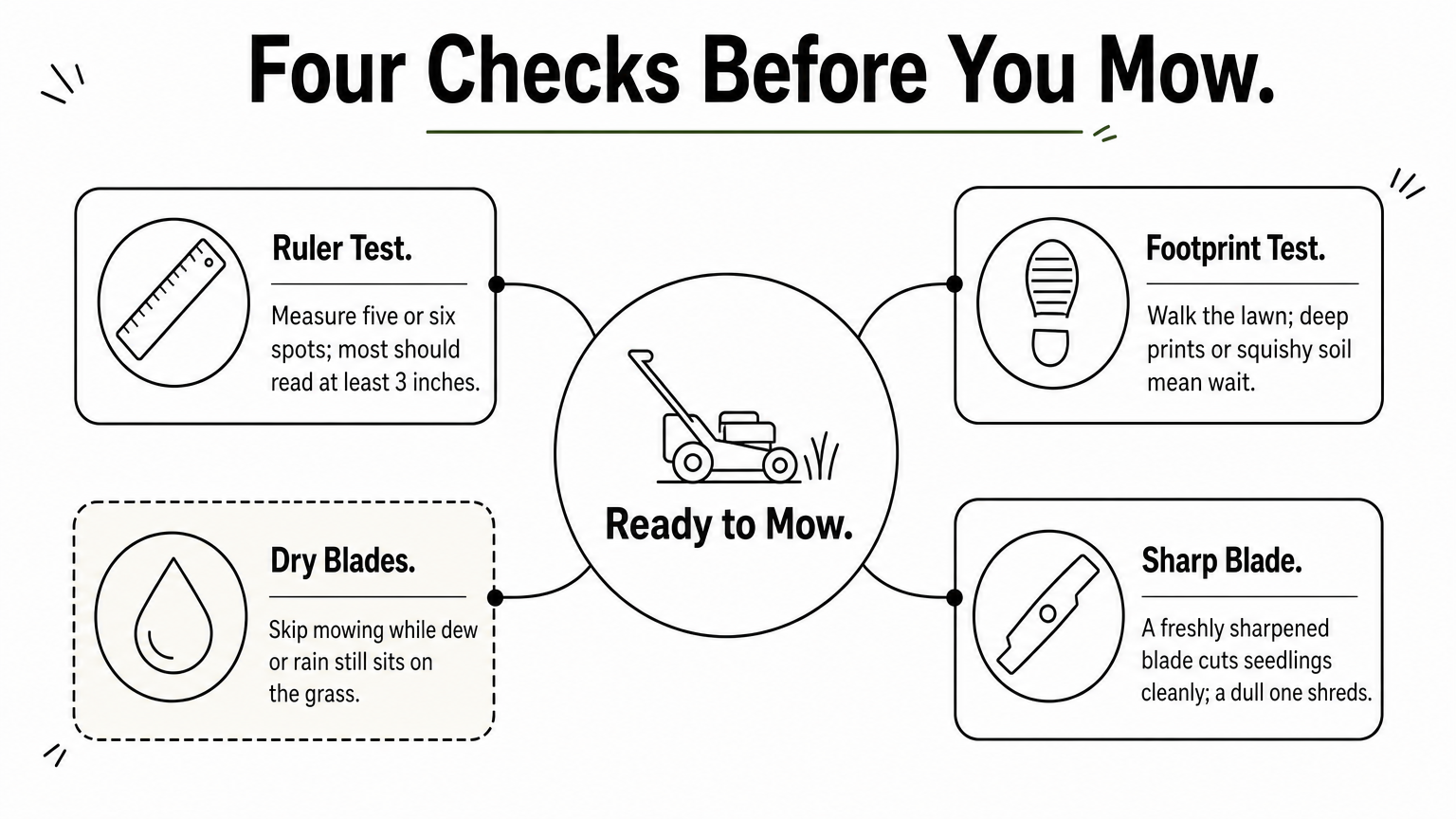
- Ruler test. Measure in five or six spots, including thin and shady areas. Most should read at least 3 inches.
- Footprint test. Walk the lawn. If your shoes leave deep prints or the soil squishes, wait.
- Dry blades. Skip mowing while dew or rain still sits on the grass.
- Sharp blade. A freshly sharpened blade cuts seedlings cleanly. A dull one shreds them.
If you overshoot and the grass hits 5 or 6 inches, do not cut it all at once. Take it down in two mows a few days apart.
Mowing a few days late costs you nothing, but mowing a few days early can cost you patches.
How to mow new seedlings without damaging them
Use a sharp blade, the lightest mower you have, dry grass, and remove no more than one-third of the blade height per cut. Those four habits protect the seedlings while you still get a clean first mow.
Set up the mower
Sharpen the blade before the first cut. Then set the deck so you take off one-third at most . For a 4-inch stand, that means a cutting height near 3 inches. Cutting lower stresses young grass that has not built reserves yet.
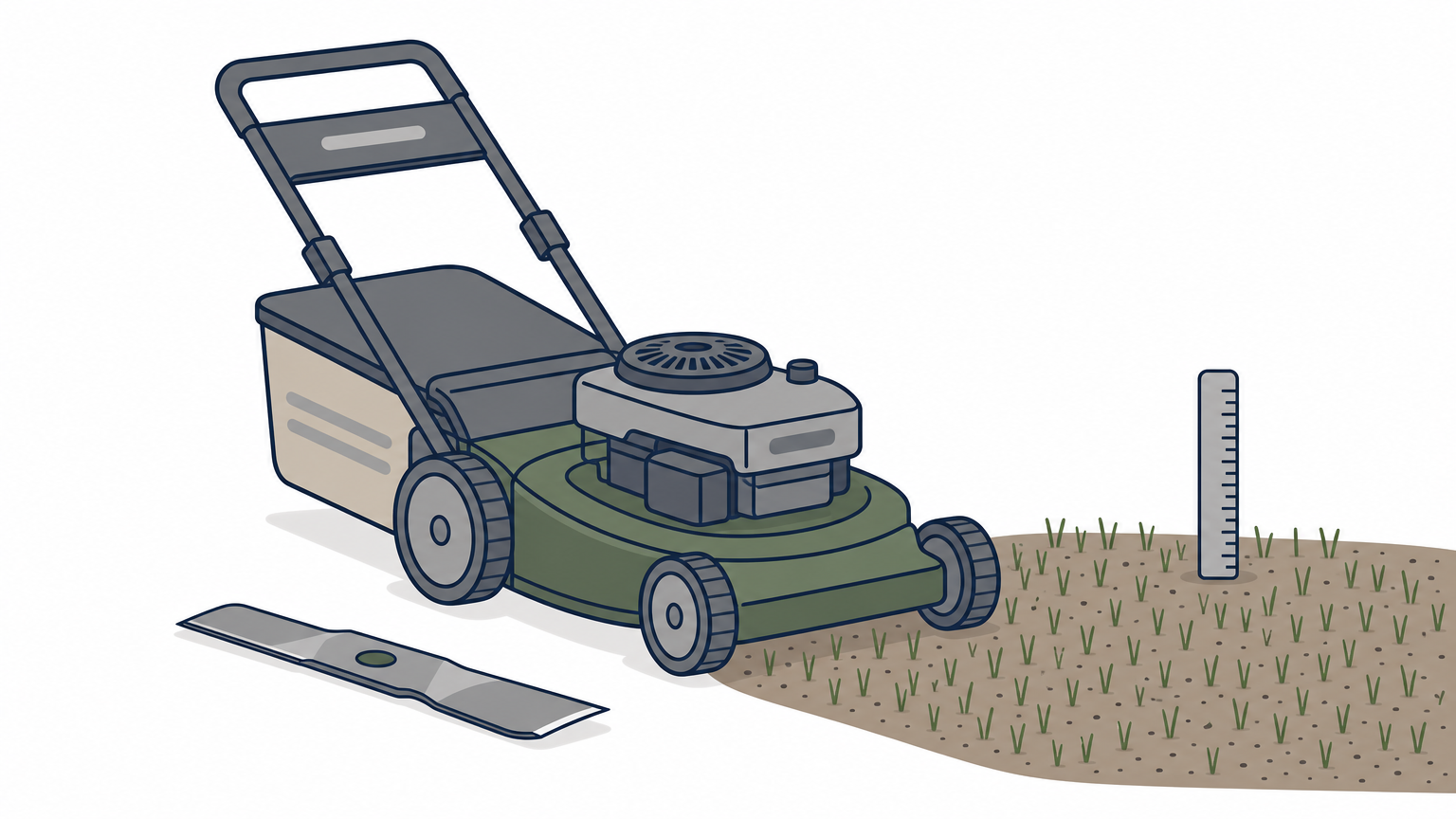
A push mower is the better choice for this mow. Its lighter weight presses the soil less, and you control every turn. If you only have a riding mower, keep the speed low and avoid tight turns.
The first pass, step by step
- Mow in the afternoon, once the grass is completely dry.
- Walk or drive slowly, so the blade cuts and does not tear.
- Make wide, gentle turns. Never pivot a wheel in place on the new grass.
- Leave light clippings on the lawn, where they return nutrients. Rake off any clumps thick enough to smother seedlings.
- Resume light watering that evening or the next morning.
- Mow again in 5 to 7 days, then go back to your normal routine.
Keep the next few mows on the high side. Lower the height gradually over several cuts, never in one step. Seedlings thicken and root deeper with each mow, and by the third cut the lawn handles like any other.
The first mow should trim the seedlings, not test them.
Mowing and watering around aeration day
Mow before aeration, keep the seedbed damp afterward, and avoid a few habits that wreck new grass. The timing rules differ slightly depending on whether you seeded.
Mowing before aeration and overseeding
Mow a day or two ahead, one notch lower than usual , and bag the clippings. Shorter grass lets seed reach the soil instead of landing in the leaves. Do not scalp the lawn, because bare, stressed turf is slower to recover.
If you aerated without seeding, you can mow as soon as the lawn is dry. The soil plugs on the surface break down on their own, and a pass with the mower speeds that up. With seed in the ground, follow the 3 to 4 inch rule above.
Watering and what not to do after aerating
Water right after seeding to settle the seed into the soil. Then use light, short cycles once or twice a day to keep the top inch damp, never puddled. Once seedlings are up, taper to deeper, less frequent watering. Skip watering the morning of your first mow so the soil stays firm.
Avoid these mistakes during the first three weeks:
- Pre-emergent weed control. It stops grass seed from sprouting as well as weeds.
- Early or low mowing. Both are covered above, and both thin the new stand.
- Letting the seedbed dry out. Seed that sprouts and then dries out dies.
- Heavy foot traffic. Parties, pets and kids' games churn up soft soil and seedlings.
Keep the seedbed damp until the grass is up, then let the soil firm up before the first mow.
Wait for the height, then mow
Give new grass two to three weeks, measure it, and make the first cut when most seedlings stand 3 to 4 inches tall. Use a sharp blade, mow on dry grass, and take off no more than a third of the height. Keep watering light until the lawn is established, and hold off on weed preventers until the new grass is mature.
If you would rather have a crew handle the seeding and the timing, our aeration and overseeding service covers lawns across Columbia and the Midlands. The same familiar crew can keep the lawn mowed once it is ready.