
Lawn Aeration and Overseeding Service: What You Pay For
A lawn aeration and overseeding service relieves compacted soil and then plants new grass seed into it. A crew runs a machine over your lawn that pulls out small plugs of soil, then spreads seed so it lands in the holes and on the loosened ground. Aeration comes first because seed needs contact with soil, and soil needs air and water to grow roots. For thin, worn or compacted lawns, it is one of the most effective single visits you can book.
Results are not instant. The soil plugs sit on the surface for a week or two, and the seed needs a couple of weeks to sprout. A noticeably thicker lawn shows up over the following weeks and into the next growing season.
This guide covers why the service is worth paying for, what a professional visit includes, when to book it in the Midlands, what drives the price, and how to choose a company. Sparta Lawn Care performs aeration and overseeding for homes, businesses and HOA common areas around Columbia, so the advice below reflects what works on local lawns.
Why aeration and overseeding are worth paying for
The service is worth paying for when your lawn is compacted, thin or heavily used, because those problems start below the surface. Extra water or fertilizer will not fix them.
What compaction and thin turf cost you
Soil gets packed down by mowers, kids, dogs, parked cars and years of settling. Compacted soil blocks air, water and nutrients from reaching the roots, so the roots stay shallow. Water runs off instead of soaking in, and the lawn browns quickly in summer heat. Many Midlands yards sit on clay, which compacts easily.
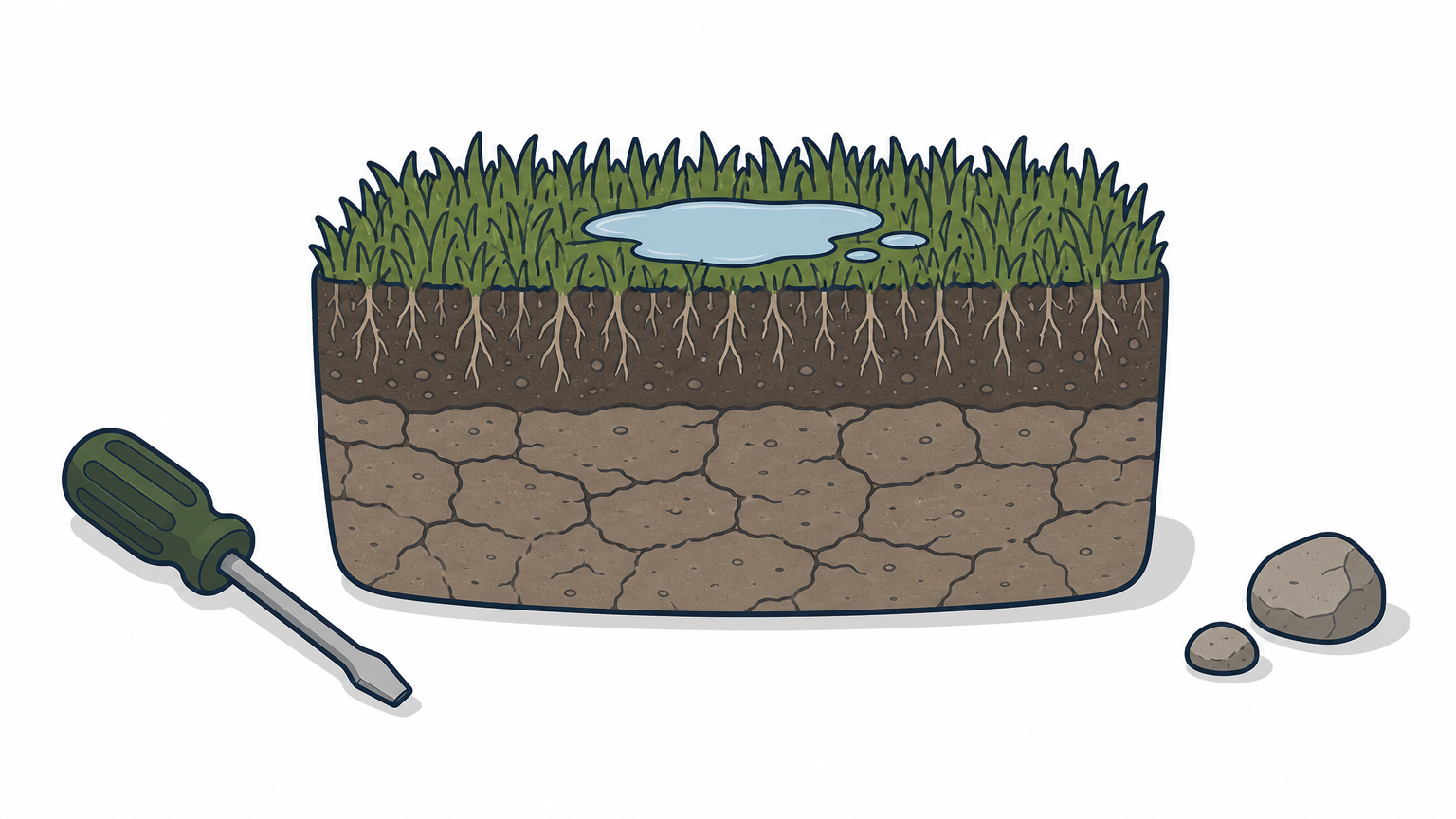
Thin turf creates a second problem. Bare soil gets colonized by whatever seed lands there, and that is usually weeds. Thick grass crowds weeds out , so density is your cheapest weed control.
Seed thrown onto compacted soil mostly washes away or dries out, and aeration is what gives it a place to grow.
| What you see | What is behind it | What fixes it |
|---|---|---|
| Water pools or runs off | Compacted soil | Core aeration |
| Thin or bare patches | Worn or damaged turf | Overseeding after aeration |
| Weeds in open spots | Gaps in the turf | A denser lawn from overseeding |
| Lawn browns fast in summer | Shallow roots | Aeration, then deeper watering |
When the service is not worth it
Skip it if your lawn is already dense and the soil drains well. A screwdriver should push into moist soil with little effort. A healthy lawn can skip overseeding, though aeration once a year still helps on clay.
Seed also fails when the real cause is shade, grubs, disease or the wrong grass for the spot. Fix the cause first , or you pay to plant seed that dies. If large areas are bare, such as after construction, sod installation is often the better route. Sparta installs Bermudagrass, Zoysiagrass and Centipedegrass sod for those jobs.
What a professional aeration and overseeding visit includes
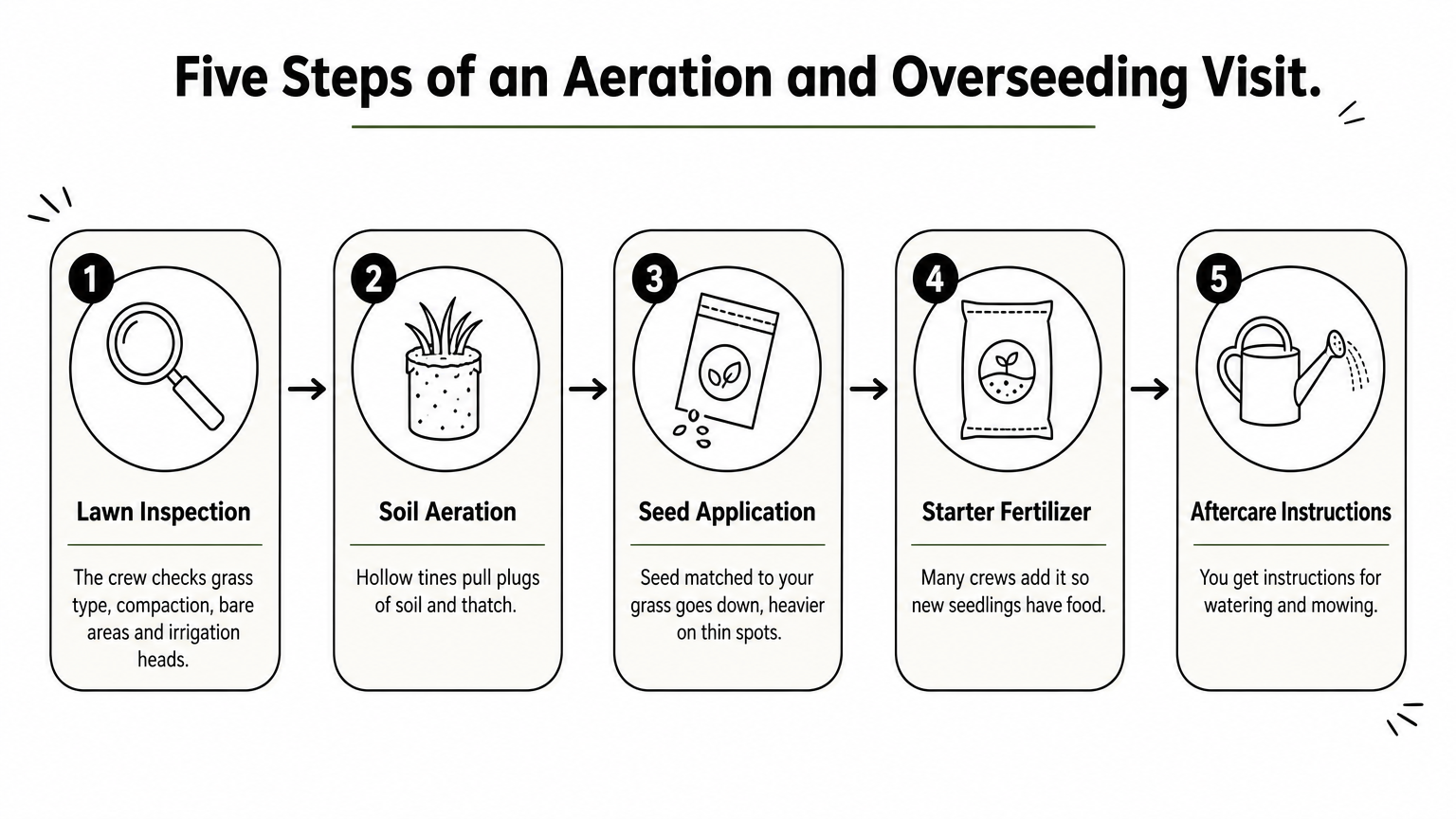
A full visit has four parts: an inspection, aeration, overseeding and aftercare instructions. Aeration always comes before seeding.
The steps, in order
- Inspection. The crew checks your grass type, compaction, bare areas and where irrigation heads sit.
- Aeration. A machine with hollow tines pulls plugs of soil and thatch, with extra passes over compacted areas.
- Overseeding. Seed matched to your grass type goes down across the lawn, heavier on thin spots.
- Starter fertilizer. Many crews apply one so new seedlings have food when they sprout.
- Aftercare. You get instructions for watering and mowing.
Yes, aeration should be done before overseeding, and ideally on the same visit. Seed spread first just sits on thatch and soil crust. The holes catch seed, shelter it and give it contact with soil. You will also see two methods offered. Sparta provides both core and liquid aeration. Core aeration is the proven choice for heavily compacted soil, while liquid works as a lighter supplement, so ask which one a quote assumes.
Aeration before seed is the whole point of the service, because the holes are where the seed takes hold.
What you do before and after
Before the visit, mow a day or two ahead at your normal height. Mark sprinkler heads, shallow irrigation lines, invisible fence wire and anything else the aerator could damage.
Afterward, water lightly several times a day so the top inch stays moist until seedlings sprout, then taper off. Hold off mowing for about two weeks, until the new grass has established. Leave the plugs alone, because rain and mowing break them down within a couple of weeks and return nutrients to the soil. Keep traffic and pets off the lawn while the seed germinates.
When to book it in the Midlands
Fall is the season for overseeding here. Sparta recommends it because cooler soil and fall rain help seed sprout and root before winter. Aeration timing depends on your grass.
Timing by grass type
| Grass type | Best aeration window | Overseeding |
|---|---|---|
| Tall fescue | Early to mid fall, same visit as seeding | Fall |
| Bermudagrass, zoysia, centipede | Late spring to early summer, while actively growing | Fall, with seed chosen for your grass type |
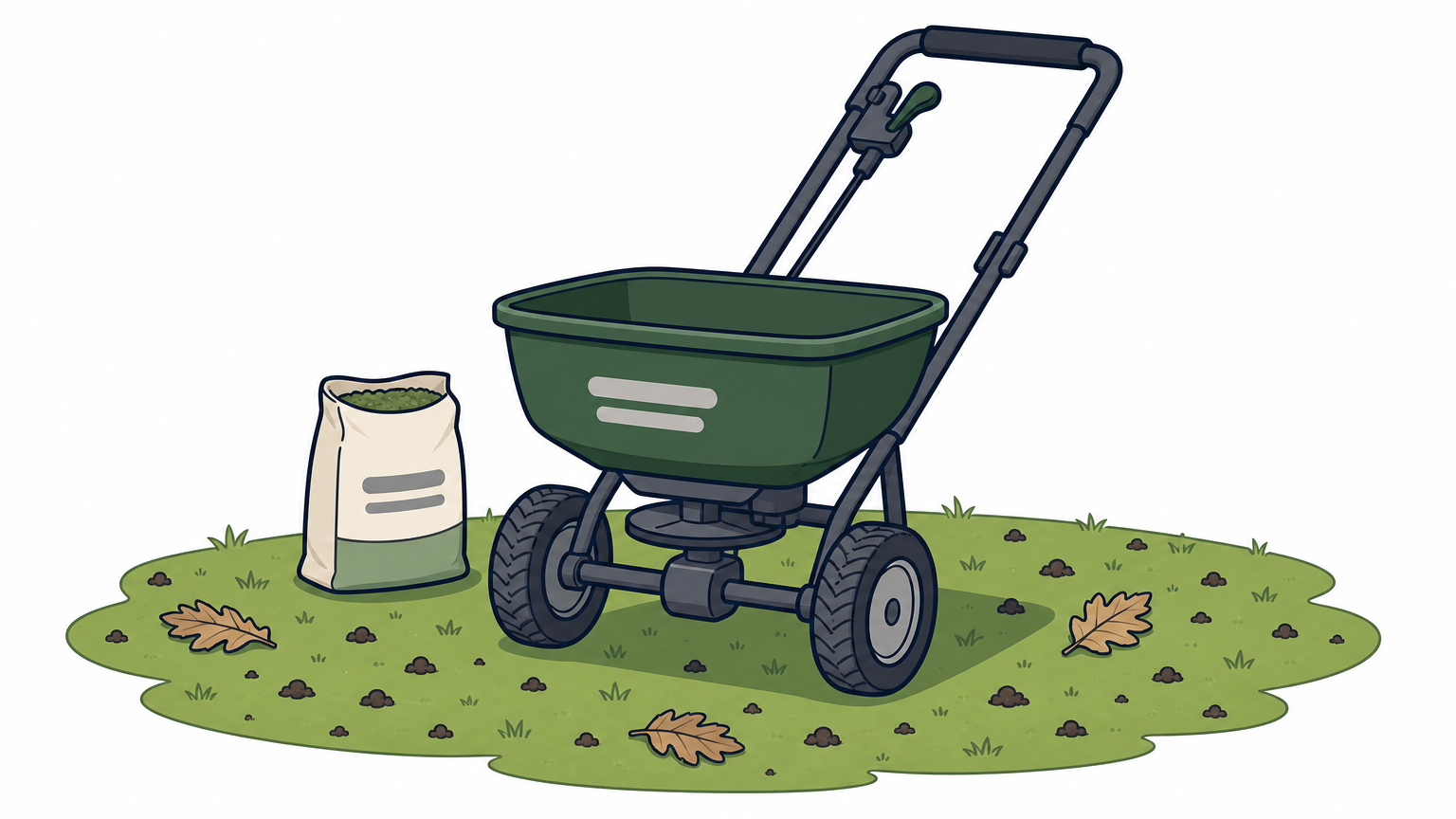
Warm-season grasses recover fastest when they are growing strongly, which is why late spring to early summer suits them. Be wary of anyone who wants to seed in midsummer heat or in winter. If the fall window has passed, book for the next one rather than seeding out of season.
How often to repeat it
Most lawns benefit from core aeration about once a year , especially on clay or with heavy traffic. A healthy lawn on well-draining soil can stretch that to every other year.
Overseeding is a response to thinning, not a calendar chore. Lawns that thin out each year may need it annually, while others do fine every two to three years. Fall is a busy season for lawn companies, so schedule early.
Time the visit to your grass type and the season, and the same service performs far better.
What drives the price and how to compare quotes
Price is set mainly by the size of your turf area. Compaction, seed type and rate, and access also move it. The fair way to compare quotes is price per 1,000 square feet with the same seed and the same scope.
What moves the price
| Factor | Why it matters |
|---|---|
| Turf area | Quotes scale with square footage of actual grass, not lot size |
| Compaction, slopes, obstacles | Hard soil needs extra passes, and obstacles slow the crew |
| Seed type and rate | Better blends cost more, and bare areas take more seed |
| Aeration method | Core and liquid differ in equipment and labor |
| Add-ons | Starter fertilizer, topsoil or weed control add cost |
No reputable company aerates and seeds for free. What is often free is the estimate, so ask. Prices also vary by market, which is why local quotes beat national averages.
A worked comparison
Say you have 6,000 square feet of turf and get two quotes. Quote A is $210, which is $35 per 1,000 square feet. Quote B is $270, or $45 per 1,000 square feet. The $60 gap means little until you ask what it buys.
If A uses a bargain seed mix at a light rate and B uses a quality blend at the right rate, B can be the better deal. Ask for the seed name and pounds per 1,000 square feet. Also ask how many aeration passes are included.
Compare quotes by scope and seed, because the cheapest line can be the most expensive result.
How to choose a company near you
Choose by the answers to a handful of questions, not by who ranks first in a search for aeration and overseeding services near me or a "best" list. The right company can explain its work in plain terms.
Questions to ask before you hire
- Are you licensed and insured?
- Is this core or liquid aeration, and how many passes?
- What seed will you use, why is it right for my grass, and at what rate?
- When will you do the work, and why then?
- Will the same crew handle my property?
- What written aftercare instructions do I get?
- What happens if the seed does not take?
Vague answers are a warning sign. A company that cannot name its seed or its timing is guessing.
Local crew or national chain
Aeration and overseeding companies range from national chains to one-truck operators. Local crews know the soil and the seasons where you live, and they are easier to reach if something goes wrong. Chains often sell bundles, so check that the aeration scope is spelled out.
Sparta Lawn Care is veteran-owned, locally owned, licensed and insured, with more than 20 years of experience. It offers core and liquid aeration with overseeding for homes and commercial properties. The Sparta Family Guarantee promises to fix any service issue at no additional cost until you are satisfied. A consistent, familiar crew visits each property.
The best company is the one that can tell you exactly what goes into your soil and when.
Getting the timing and the quote right
A lawn aeration and overseeding service pays off when soil is compacted or turf is thin. Aeration comes first, fall is the overseeding season in the Midlands, and your grass type decides the aeration window. Judge quotes by price per 1,000 square feet and by the seed and scope behind the number, and choose a company that answers your questions plainly.
If you are in Columbia, Blythewood, Elgin, Chapin or nearby, talk to Sparta Lawn Care about aeration and overseeding. You can also reach the team by phone or text at (803) 261-1485, Monday to Friday, 8:30am to 5:00pm.