

Lawn Mowing Service Agreement: How to Write One in 4 Steps
A lawn mowing service agreement is a one- to two-page contract that names the services, the schedule, the price, the payment terms, and what happens when something goes wrong. To write one, list exactly what you mow, set a per-visit or monthly price, add a few protection clauses, and get both signatures before the first cut. The template in this guide gives you wording to copy and adapt.
Most mowing disputes start with a vague handshake deal. The client thought edging was included. You assumed a rained-out week would simply be rescheduled. A gate was locked, a sprinkler head got clipped, or an invoice sat unpaid for six weeks. None of these problems is hard to fix, but each is hard to fix when nothing is in writing.
Sparta Lawn Care has mowed residential and commercial properties around Columbia, Blythewood, and Elgin, SC for more than 20 years, and the points below come from that routine work. You will learn why the agreement matters, then build it in four steps. The last step ends with a full template you can paste into Word or Google Docs.
Why a written agreement protects your mowing business
A written agreement protects you because it turns assumptions about scope, timing, and payment into terms that both sides signed. It works the same whether you run a one-truck route or a small crew.
What the agreement does for both sides
Recurring work runs on habit, and habit is where misunderstandings grow. An agreement sets expectations on tasks, price, and schedule, and it gives you proof of the terms if a client disputes a bill. It also states that you work as an independent contractor, not as the client's employee.
Homeowners can use the same structure to review a contract a provider hands them. A missing price, schedule, or cancellation term is a good reason to ask questions before signing.
Can you write your own contract?
Yes. In most cases a clear written agreement that both parties sign is enforceable, and routine residential mowing does not require a lawyer to draft it. Even a detailed email or text can serve as evidence, but a signed document is far easier to rely on. Have an attorney review your template once, and again before you sign large commercial or HOA contracts . This guide is general information, not legal advice.
If it is not written down, it is not part of the deal.
What to have ready first
Gather these items before you write a word:
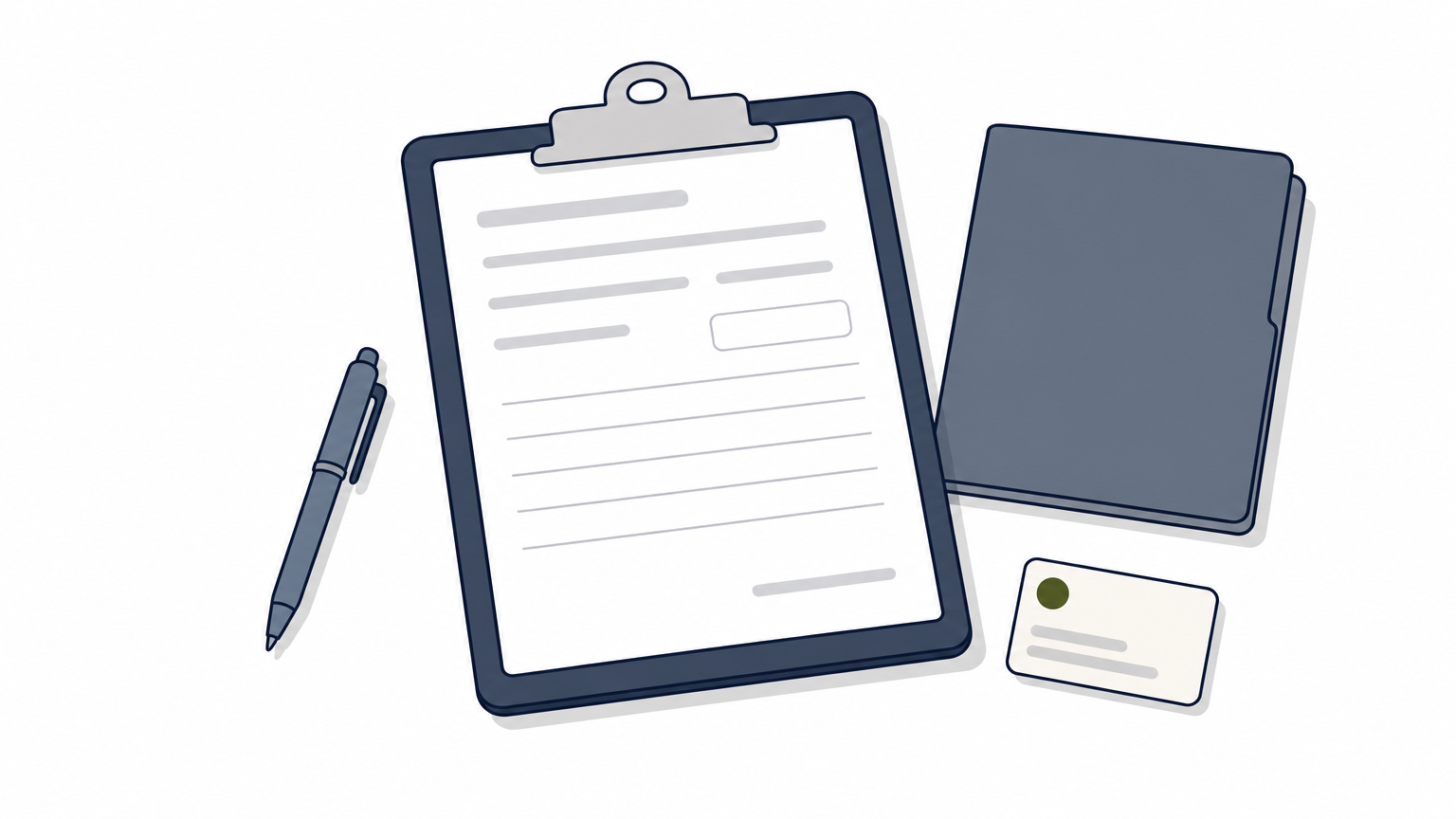
- Your legal business name and contact details
- Your per-visit or monthly price for the property
- Proof of insurance you can show on request
- The one payment method you will accept
- Property details such as address, grass type, gates, and pets
Basic mowing often needs no special license, but check with your city or county about business license rules. Tasks like irrigation work can require separate licensing .
Step 1. Define the services and schedule
List every task by name and frequency, and state which tasks are not included. Vague phrases like "weekly maintenance" are where scope arguments begin.
List the tasks one by one
Write each task as its own line item. A residential mowing visit commonly bundles mowing with trimming and edging along driveways, walkways, and flower bed borders. Add whether you blow clippings off hard surfaces and whether you bag and haul clippings .
Then name the exclusions. Fertilizing, aeration, hedge trimming, and leaf removal should be priced separately and added in writing. Record property details here too: gate codes, pets, and areas you should not touch.
Set the schedule, weather rules, and cutting height
Warm-season grasses such as Bermuda, Zoysia, and Centipede grow fast in summer and slow down in cooler months. So write a seasonal schedule , for example weekly in peak growth and every other week at the edges of the season. State the service day as "on or near" a weekday so a rainy Tuesday does not become a breach.
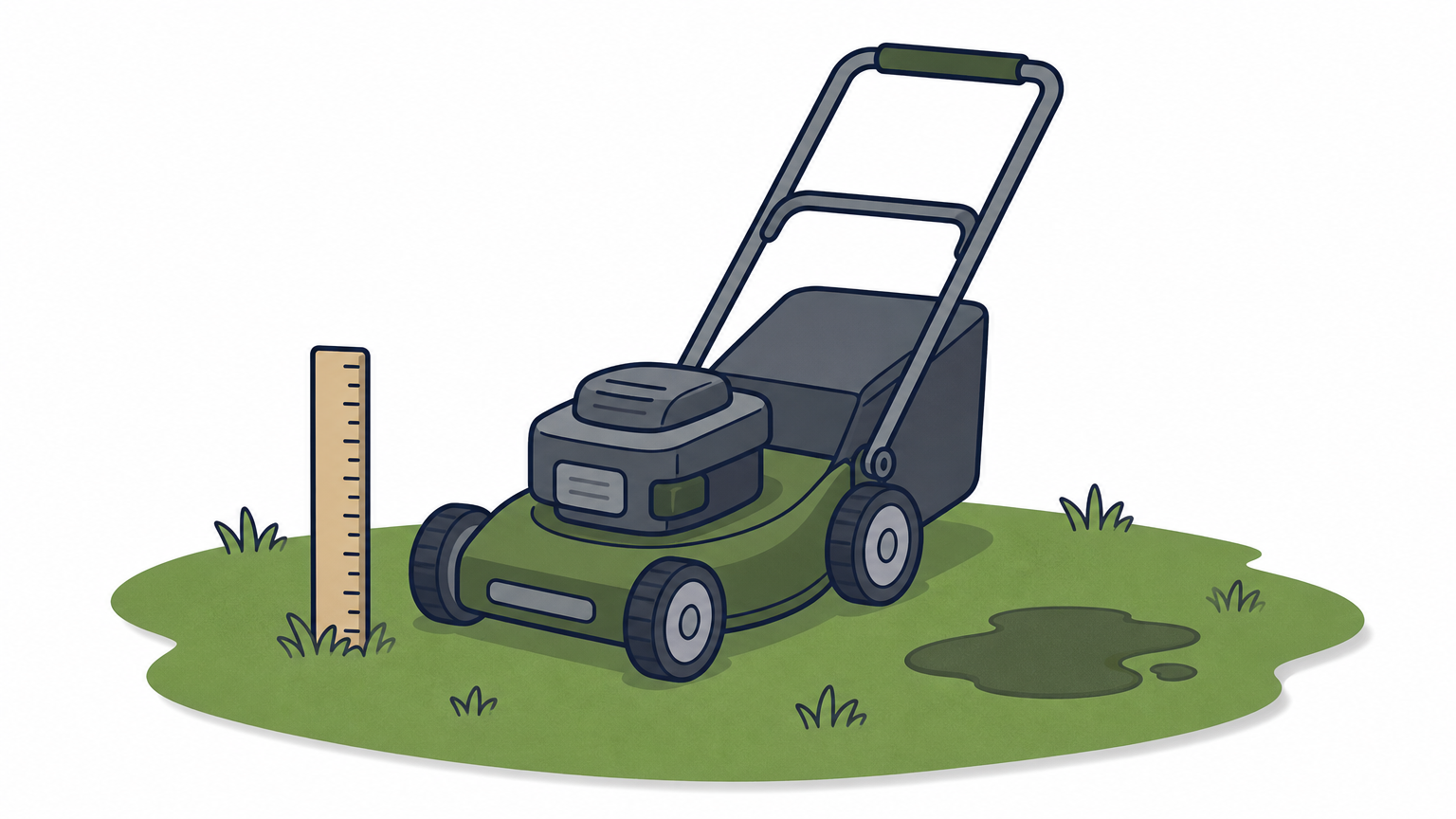
Write down a cutting height for the client's grass type. Follow the one-third rule: never remove more than a third of the blade height in one cut. If rain delays a visit, the contract should let you raise the height, make two passes, or charge for the extra work on an overgrown lawn.
Name every task and every exclusion, because scope is where most disputes start.
Step 2. Set the price and payment terms
Pick one pricing model, state the amount, say when and how the client pays, and say what happens when payment is late. A lawn mowing service agreement with no payment terms is only a promise to work.
Choose per-visit or monthly pricing
What a mowing contract costs depends on lot size, slope, gates, obstacles, and visit frequency. Per-visit prices swing widely between properties, so quote each lawn from its measurements rather than a flat rate.
| Model | How it works | Best for |
|---|---|---|
| Per visit | Client pays a set price after each mow | New clients, irregular schedules |
| Monthly flat fee | Same payment every month in season | Weekly residential routes |
| Seasonal total | One price split into equal installments | Commercial and HOA properties |
Here is an illustrative example. Say you quote $45 per visit and expect 30 weekly visits in a season. That is $1,350 for the season, which you can bill as six monthly payments of $225.
Spell out payment, late fees, and rate changes
Name one payment method and a due date, such as 7 days after the invoice. Sparta Lawn Care takes online credit card payments through a client hub powered by Jobber, which keeps records clean. Whatever you choose, write it in.
Add a modest late fee with a dollar amount and a right to pause service until the balance is paid. Finish with a rate-change clause, such as 30 days' written notice, so a fuel or labor increase does not mean renegotiating from scratch.
A price without a due date and a late-payment rule is only a suggestion.
Step 3. Add the protection clauses
Five clauses carry most of the risk: insurance, damage, independent contractor status, cancellation, and a fix-it promise. Each takes one or two sentences.
Cover insurance, damage, and contractor status
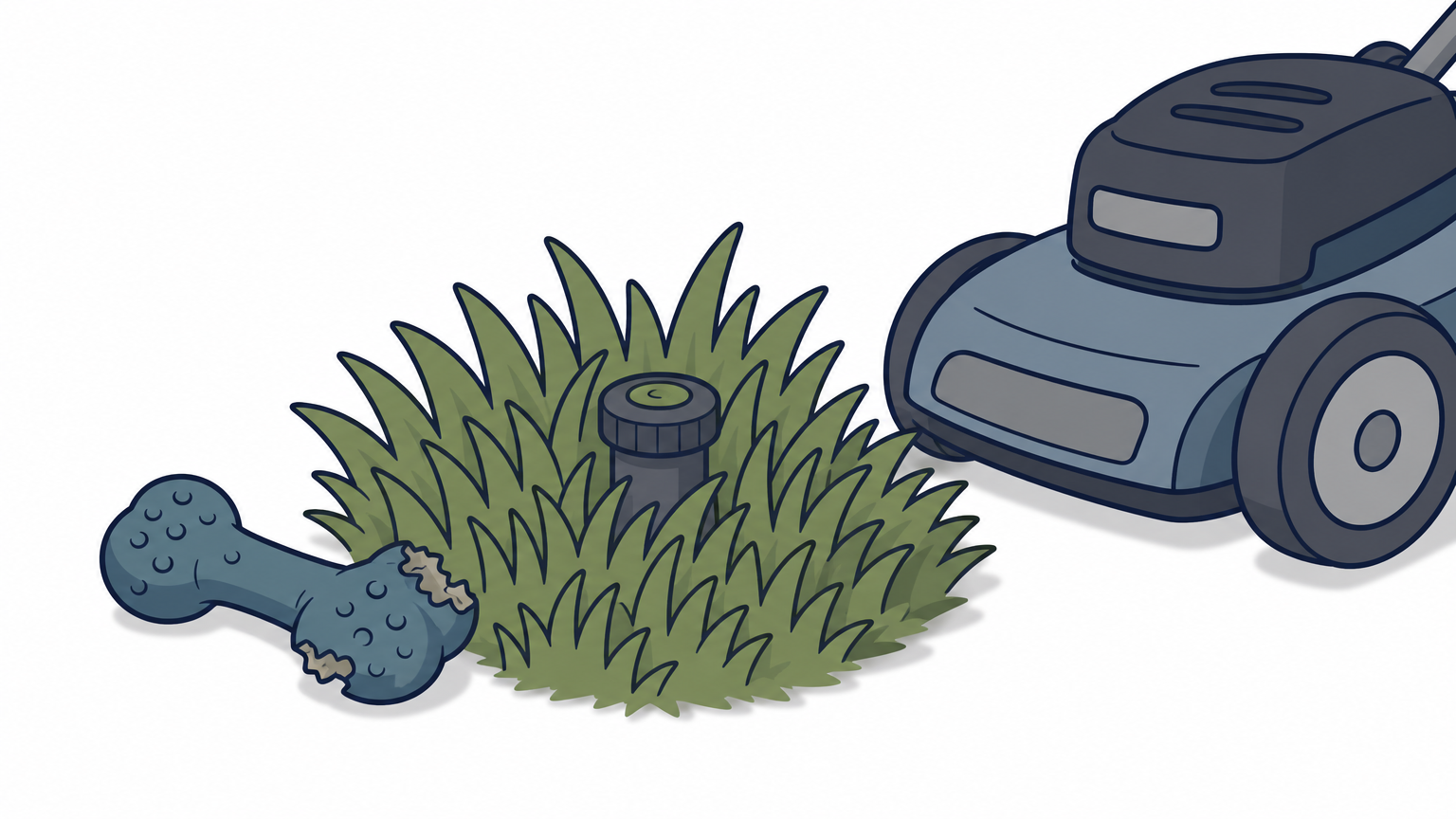
State that you carry general liability insurance and will repair damage caused by your negligence. Ask the client to disclose hidden hazards, such as shallow sprinkler heads, buried dog toys, and loose debris, because a mower can throw them. Add an independent contractor sentence so there is no doubt that you handle your own taxes, equipment, and crew.
For commercial or HOA work, expect to hand over a certificate of insurance. Those agreements also tend to run a full season or year, so name a single point of contact and a longer notice period.
Set cancellation and satisfaction terms
Give both sides the same exit: 14 days' written notice is common for residential work, with payment due for services already performed. Then add a satisfaction clause . For example, the client reports a concern within 48 hours and you fix it at no charge. Sparta Lawn Care backs its work the same way with its Sparta Family Guarantee, which promises to fix any service issue at no additional cost.
| Clause | What it prevents |
|---|---|
| Insurance and damage | Arguments over who pays for repairs |
| Hazard disclosure | Surprise claims about thrown objects |
| Contractor status | Confusion about taxes and employment |
| Cancellation notice | Abrupt stops with unpaid visits |
| Satisfaction fix | Small complaints turning into lost clients |
Protection clauses work best when they are short, fair to both sides, and easy to read.
Step 4. Assemble, sign, and keep the agreement
Combine your scope, schedule, pricing, and protection clauses into one document, fill in every bracket, and have both parties sign. Use plain language, because a client who understands the contract is more likely to honor it.
Copy-and-paste template
Paste this into Word or Google Docs, replace the bracketed items, and delete any task you do not offer.
 LAWN MOWING SERVICE AGREEMENT

1. Parties. This agreement is made on [DATE] between [PROVIDER NAME], [ADDRESS, PHONE, EMAIL] ("Provider") and [CLIENT NAME], [ADDRESS, PHONE, EMAIL] ("Client").

2. Property. Services will be performed at [SERVICE ADDRESS]. Grass type: [BERMUDA / ZOYSIA / CENTIPEDE / OTHER]. Access notes: [GATE CODE, PETS, EXCLUDED AREAS].

3. Services. Provider will perform: [ ] mowing at [HEIGHT] inches, [ ] string trimming, [ ] edging driveways and walkways, [ ] blowing hard surfaces clean, [ ] clippings bagged and removed. Not included unless added in writing: fertilizing, aeration, hedge trimming, leaf removal, irrigation repair.

4. Schedule. Service will occur [WEEKLY / EVERY OTHER WEEK] on or near [DAY], from [START DATE] to [END DATE]. Rain or unsafe conditions delay service, and Provider will reschedule within [2] business days. Provider may adjust frequency with seasonal growth.

5. Price. Client will pay $[AMOUNT] per visit / $[AMOUNT] per month. Rates may change with [30] days' written notice.

6. Payment. Invoices are sent [WEEKLY / MONTHLY] and are due within [7] days. Payment method: [METHOD]. Balances more than [14] days late incur a fee of $[AMOUNT], and Provider may pause service until paid.

7. Satisfaction. Client will report concerns within [48 hours] of a visit. Provider will correct the work at no extra charge.

8. Insurance and damage. Provider carries general liability insurance and will repair damage caused by Provider's negligence. Client will disclose hidden hazards such as sprinkler heads, debris, and buried objects.

9. Independent contractor. Provider is an independent contractor, not an employee of Client, and is responsible for its own taxes, equipment, and crew.

10. Term and cancellation. Either party may end this agreement with [14] days' written notice. Client pays for services performed through the end date.

11. Entire agreement. This is the full agreement. Changes must be in writing and signed by both parties.

Client signature: ______________________ Date: ____________
Provider signature: ____________________ Date: ____________
Sign it and keep it current
Both parties should sign before the first visit. Electronic signatures work, and you can print the document or save it as a PDF. Give the client a copy and keep one with your job records .
Review the agreement every season. Update prices, add services the client has asked for, and re-sign after major changes so the paper always matches the work.
A signed agreement only helps if it still describes the job you are actually doing.
Put it in writing before the first cut
A good lawn mowing service agreement does four things: it names the tasks, sets the schedule and price, spells out payment, and adds a few clear protection clauses. Fill in the template, adjust it for each property, and have a local attorney look it over once. After that, each new client takes only a few minutes.
If you would rather hand the mowing to a crew that already works this way, Sparta Lawn Care offers a free estimate for residential and commercial properties around Columbia, Blythewood, and Elgin. See Sparta Lawn Care's mowing and lawn care services to get started.